Driving Guide
Automatic Driving Lessons: Are They Right for You?
Automatic driving lessons can make learning simpler for some learners, but they are not the right choice for everyone. Explore the benefits, limitations and key things to consider before choosing automatic.
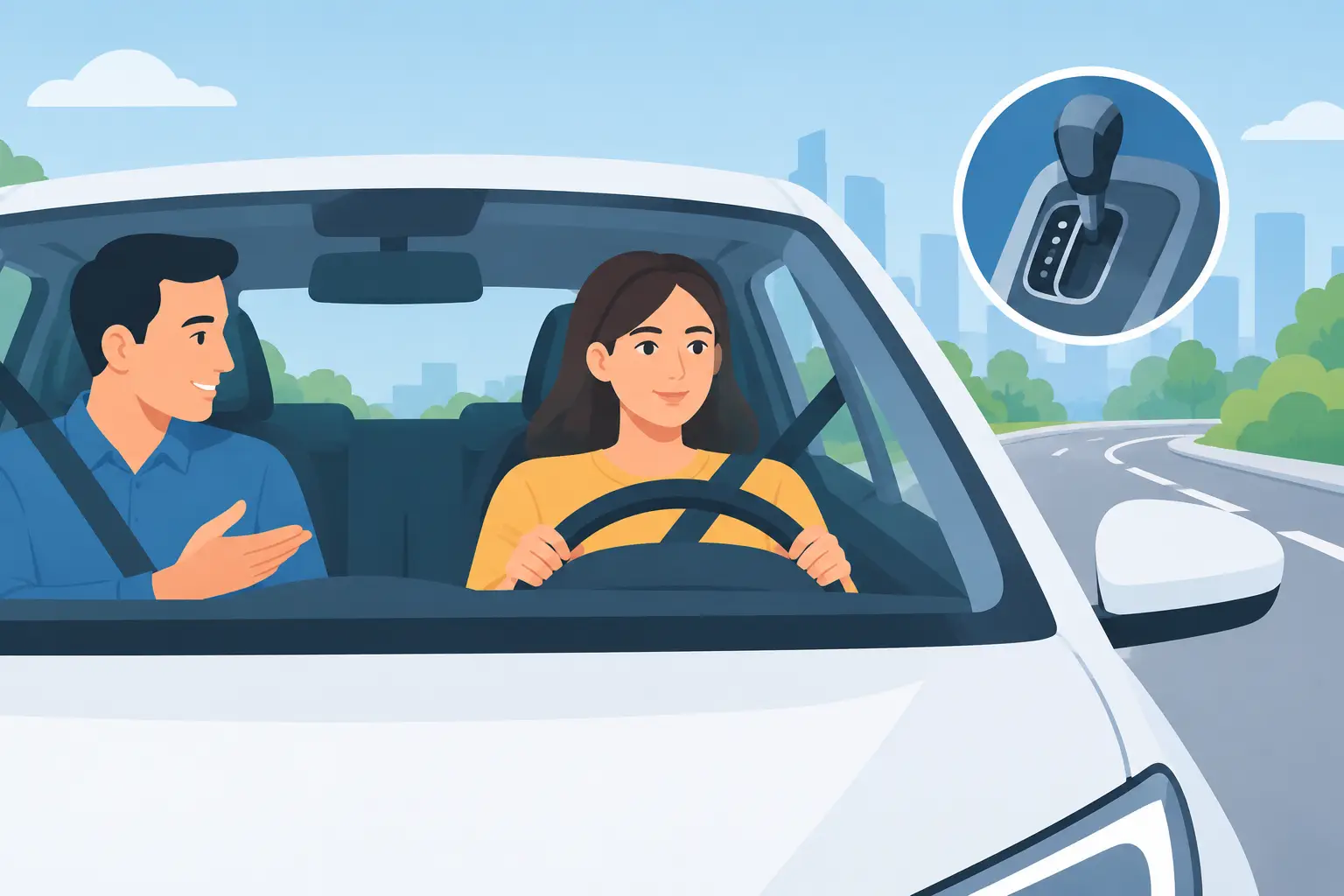
A busy roundabout, a hill start and a queue of traffic can feel like a lot to manage when you are also trying to find the biting point. Automatic driving lessons remove the clutch and manual gear changes from that picture, giving many learners more headspace to focus on steering, road signs, positioning and safe decisions.
For learners in Luton, St Albans, Stevenage, Leighton Buzzard, Letchworth, Bletchley and surrounding areas, an automatic licence can be a practical route to greater independence. It is not automatically the right choice for everyone, though. Your ideal transmission depends on the cars you expect to drive, how you learn and how you need to fit lessons around work, university or family commitments.
What happens in automatic driving lessons?
An automatic car changes gear for you. There is no clutch pedal, so you use your right foot to operate the accelerator and brake. When it is time to move, you select Drive and concentrate on controlled acceleration, observation and planning ahead. Your instructor will also teach you how to secure the car correctly when stopping or parking and how to use the vehicle's different selector positions safely.
That simplicity does not make the lessons effortless. You still need to build the safe-driving habits required of every learner: effective mirror checks, good judgement at junctions, correct lane discipline, safe speed control and awareness of other road users. You will also practise the reversing exercises used in the practical driving test, independent driving and a range of roads and traffic situations.
The difference is where your attention goes. Rather than coordinating the clutch, gears and biting point in slow traffic, you can put more focus on reading the road. For some learners, particularly those who feel overloaded by manual controls, that can make early progress feel more manageable.
Is an automatic licence right for you?
Passing your test in an automatic car gives you an automatic-only driving licence. You can drive automatic vehicles, but not manual cars, unless you later pass a practical driving test in a manual vehicle. Passing your test in a manual car allows you to drive both manual and automatic cars.
That distinction is worth considering before you book a package. If you expect to borrow or buy a manual car, have access to a family manual, or want a broader choice of vehicles, manual lessons may suit you better. A manual licence can also be useful if your future work may involve driving different types of vehicles.
On the other hand, automatic cars are increasingly common. Electric vehicles do not require a conventional manual gearbox and clutch, and many newer petrol and hybrid cars are also automatic. If the car you are likely to drive after passing will be automatic, learning in an automatic can be a practical choice.
Automatic lessons may be a particularly good fit if you want to reduce the mechanical side of learning, you have found clutch control difficult, or you would prefer to concentrate more of your attention on observation, planning and decision-making. They can also suit learners returning to driving after a long break who want to rebuild their confidence.
There is no better choice in every situation. The useful question is not simply whether automatic is easier, but whether it supports the kind of driving you expect to do after you pass.
The real benefits of learning in an automatic
More attention for the road
New drivers process a lot at once. Pedestrians may step off kerbs, cyclists move through traffic, road signs and speed limits require attention, and a sat nav may be giving directions. With no manual gear selection or clutch control to manage, many learners find they have more capacity to concentrate on what is happening around them.
This can be especially helpful on busy local routes, multi-lane roundabouts and in stop-start traffic. You still need to choose an appropriate speed, plan ahead and use the correct lane, but the car removes some of the mechanical workload.
A calmer start for nervous learners
Stalling in front of other drivers can knock confidence, even though it is a normal part of learning in a manual car. In an automatic, clutch-related stalling is not part of the learning process. That does not remove the need to stay calm under pressure, but it may help some learners approach junctions, hills and busy traffic with less concern about clutch control.
A patient instructor remains essential. Good tuition is not about rushing through topics because the car has fewer controls. It is about giving you clear explanations, enough practice and honest feedback on what still needs work.
A practical match for modern cars
The growth of electric, hybrid and automatic vehicles means automatic driving is an increasingly familiar part of everyday motoring. If you are planning to drive an electric or automatic car after passing, automatic lessons allow you to learn in the type of transmission you expect to use.
That said, vehicle availability varies. Before committing, think about what cars will realistically be available to you once you have a licence. Learning automatic is most useful when it fits your longer-term plans, not just your first few lessons.
What automatic lessons still require
It is easy to assume that fewer pedals means fewer lessons. Some learners may find certain aspects of driving easier to manage in an automatic, but no instructor can responsibly promise a fixed number of hours. Everyone starts with different experience, confidence, availability and ability to retain and apply new skills between sessions.
The standard expected on the practical driving test does not become lower because you are driving an automatic. You still need to demonstrate safe and independent driving, respond appropriately to hazards and changing road situations, complete the required exercises and show that you can make sound decisions without constant help from your instructor.
Test readiness comes from consistently safe driving, not from completing a particular number of lessons.
Automatic cars also have their own controls and characteristics to understand. You will need to learn how to use the gear selector correctly, secure the vehicle when parking, control the car at low speeds, brake smoothly and understand how your particular vehicle responds on hills and in traffic. Your instructor should explain these clearly rather than assuming an automatic car is self-explanatory.
How to choose an automatic driving instructor
The right instructor can make learning feel organised rather than uncertain. Start by looking for an approved driving instructor (ADI) or trainee driving instructor who teaches in an automatic vehicle and covers your area.
Availability matters too. A good instructor may not be a practical match if their available lesson times rarely fit your schedule. Think about whether their lessons work around college, shifts, university, childcare or other commitments.
Regular lessons can help you retain skills and build on what you learned previously. Longer lessons can provide useful time to practise more complex routes or work on a particular challenge, while shorter sessions may suit your concentration, budget and diary better.
It also helps to understand how your progress will be managed. You should know what you are working on now, what still needs practice and what you are likely to work on next. Clear communication is particularly valuable when you are preparing for your theory test, developing particular driving skills or deciding whether you are ready to book or take a practical driving test.
Real Drive helps learners compare local driving instructors, view availability, book lessons and keep their learning journey organised in one place. That means less time chasing messages and more clarity about the next step.
Make each lesson count
You do not need to arrive knowing every answer. You do need to arrive ready to learn. Wear comfortable footwear that allows you to operate the pedals safely, make sure you meet the legal requirements for learning to drive, and tell your instructor if a particular situation makes you anxious.
Whether it is dual carriageways, roundabouts, busy junctions or meeting traffic on narrow roads, identifying the issue gives you and your instructor something specific to work on.
Between lessons, revisit the feedback you were given. Think through routines such as mirrors, signal, position, speed and look, and consider how you would respond to changing situations on the road.
If you have suitable access to private practice, it can also help reinforce what you learn with your instructor, provided you meet the legal supervision and insurance requirements.
Avoid measuring yourself against a friend who passed quickly or has already had significant private driving experience. Learners develop at different rates. Taking the time to become calm, observant and consistent is worthwhile progress.
The goal is not simply to pass the test. It is to become a safe and independent driver who can make good decisions when there is no instructor sitting beside you.
Booking with a clear plan
Before you start automatic driving lessons, decide what you need from them: a complete beginner course, a confidence refresher, help with a specific skill or focused preparation for a booked driving test.
Share that goal with your instructor, but keep your lesson plan flexible as your skills develop. Your needs may change as you gain experience and discover which areas of driving require more practice.
If learning in an automatic gives you more confidence and allows you to focus more fully on the road ahead, choose it with purpose. The best lesson plan is one that fits your schedule, develops your judgement steadily and helps you become a safe, confident and independent driver.
Keep learning